What Is A Floyd Rose Bridge And Do You Need It On Your Guitar?
Whilst vibrato arms and tremolo bars have taken various forms over the years, one of the most radical inventions that made guitars extremely cool was the Floyd Rose bridge.
Quite possibly used to its greatest effect by the late Eddie Van Halen, the Floyd Rose locking tremolo arm was one of the most important innovations of the last half-century, paving the way for a new generation of guitarists who would take the instrument to its absolute limits.
To understand the Floyd Rose system, how its floating bridge and locking tuning pins fundamentally changed the electric guitar and whether you need one yourself, we need to start with the man himself.
Who Was Floyd Rose?
Much like Les Paul, Floyd D Rose was a guitarist trying to find his break, with his closest brush with success as a musician coming with the band Q5.
Before this, he was a guitarist looking for a big break and struggling with the same problems many of his contemporaries did.
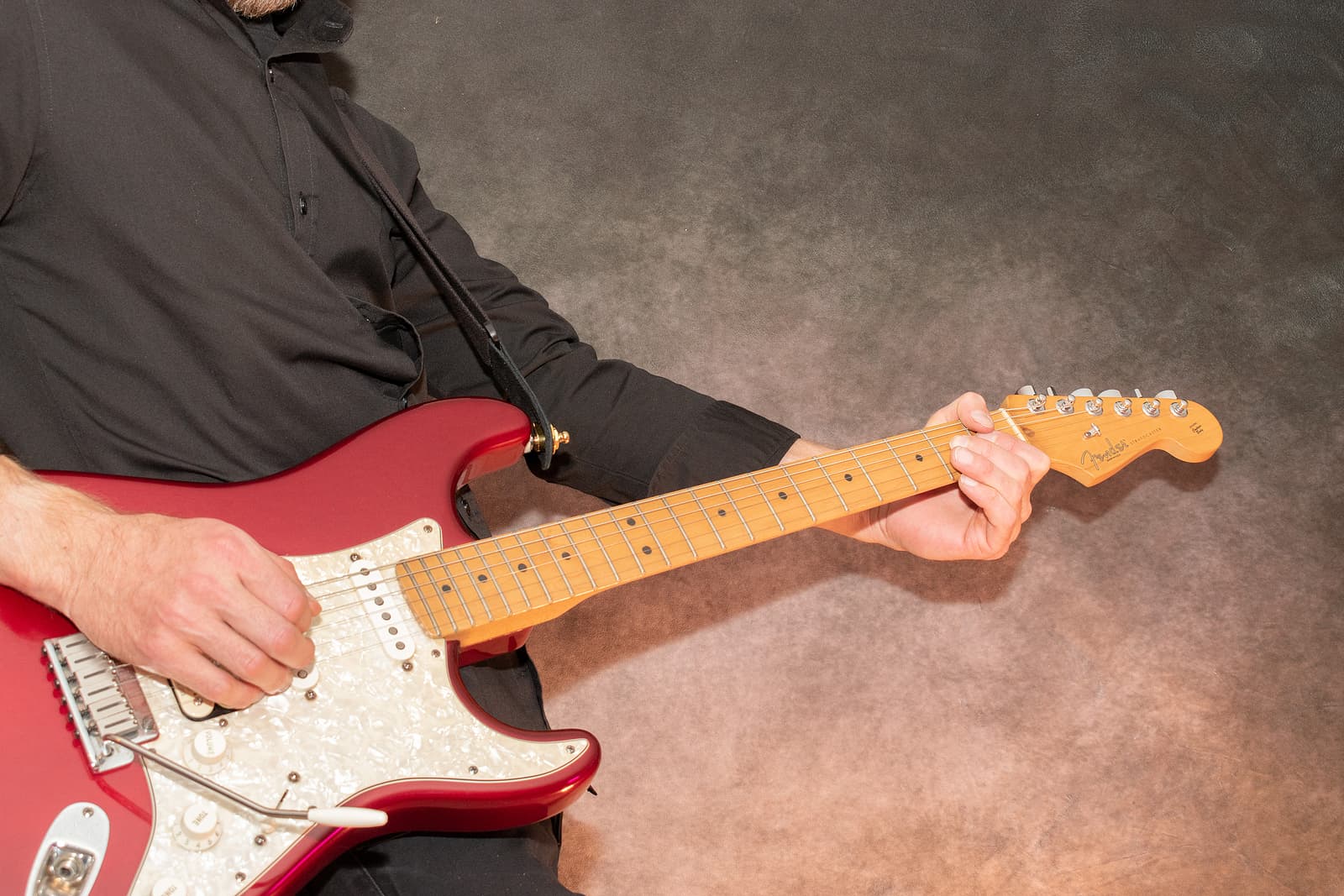
Whilst vibrato arms had existed for many years and were standard with the Fender Stratocaster, the problem with relying too much on the “whammy bar” was that it would quickly cause guitar strings to go out of tune.
With other tricks and tips failing, he developed a more advanced double locking system and floating bridge that ensured that his guitars stayed in tune.
In 1983, he finalised the design and worked with Kramer Guitars, at least until they went bankrupt. Modern Floyd Rose bridges can be found or fitted to a wide range of guitar models and shapes.
Do You Need A Floyd Rose Bridge?
If you want to undertake certain extreme guitar techniques such as dive bombing, a Floyd Rose is essential. It can also make it far easier to play your guitar without having to constantly adjust its tuning.
However, it can affect the sustain of some guitars, creating a thin tone that sometimes needs additional modifications to offset.